


A community brought together by evidence
On October 28, 2026, the Decision Theater at Tecnológico de Monterrey’s School of Government and Public Transformation, Mixcoac site, hosted the JBEE–LACEA BRAIN–Tec Workshop. The meeting was jointly organized by the Journal of Behavioral and Experimental Economics, LACEA’s Behavioral Insights Network, and BEER Lab.
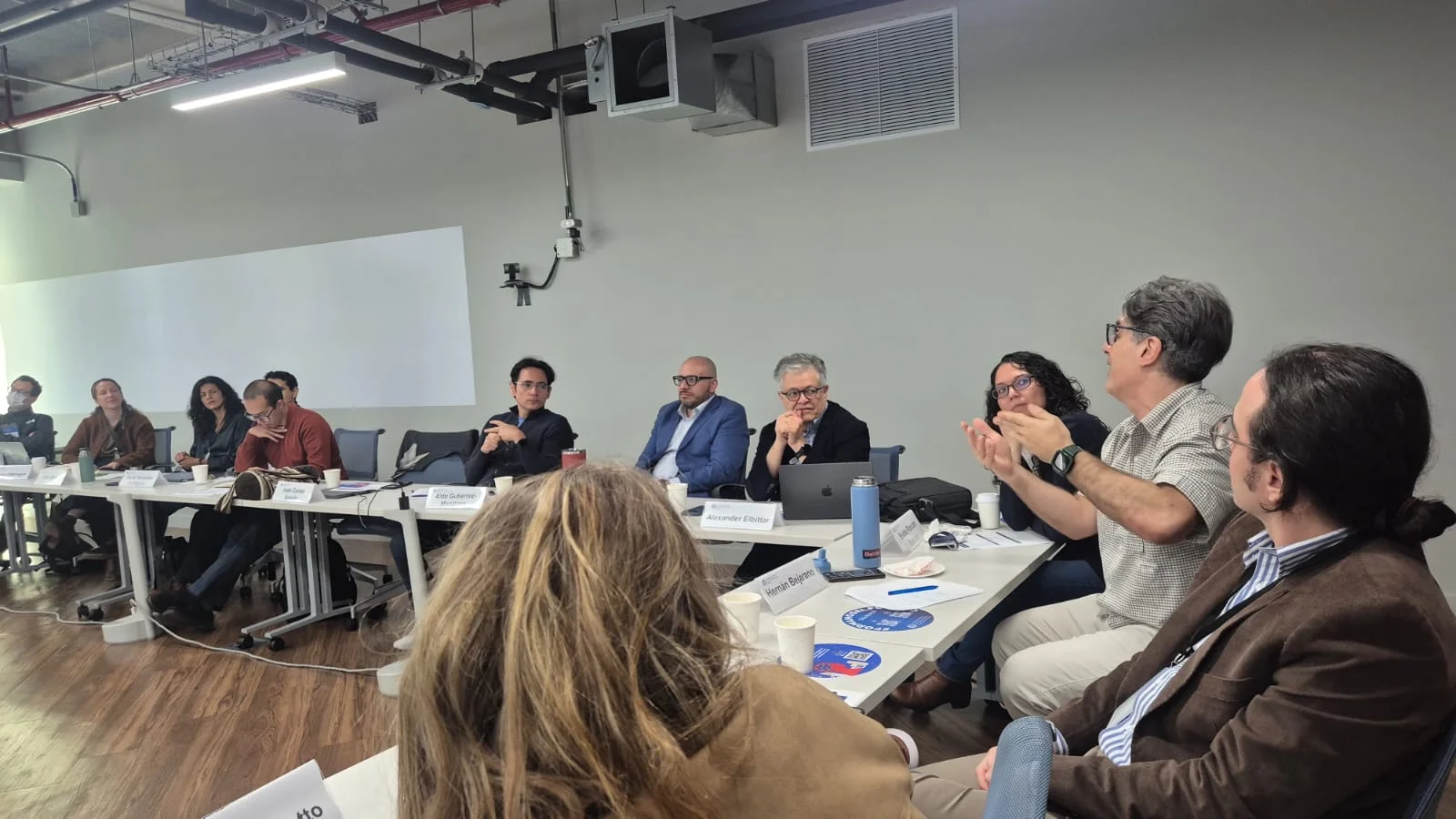
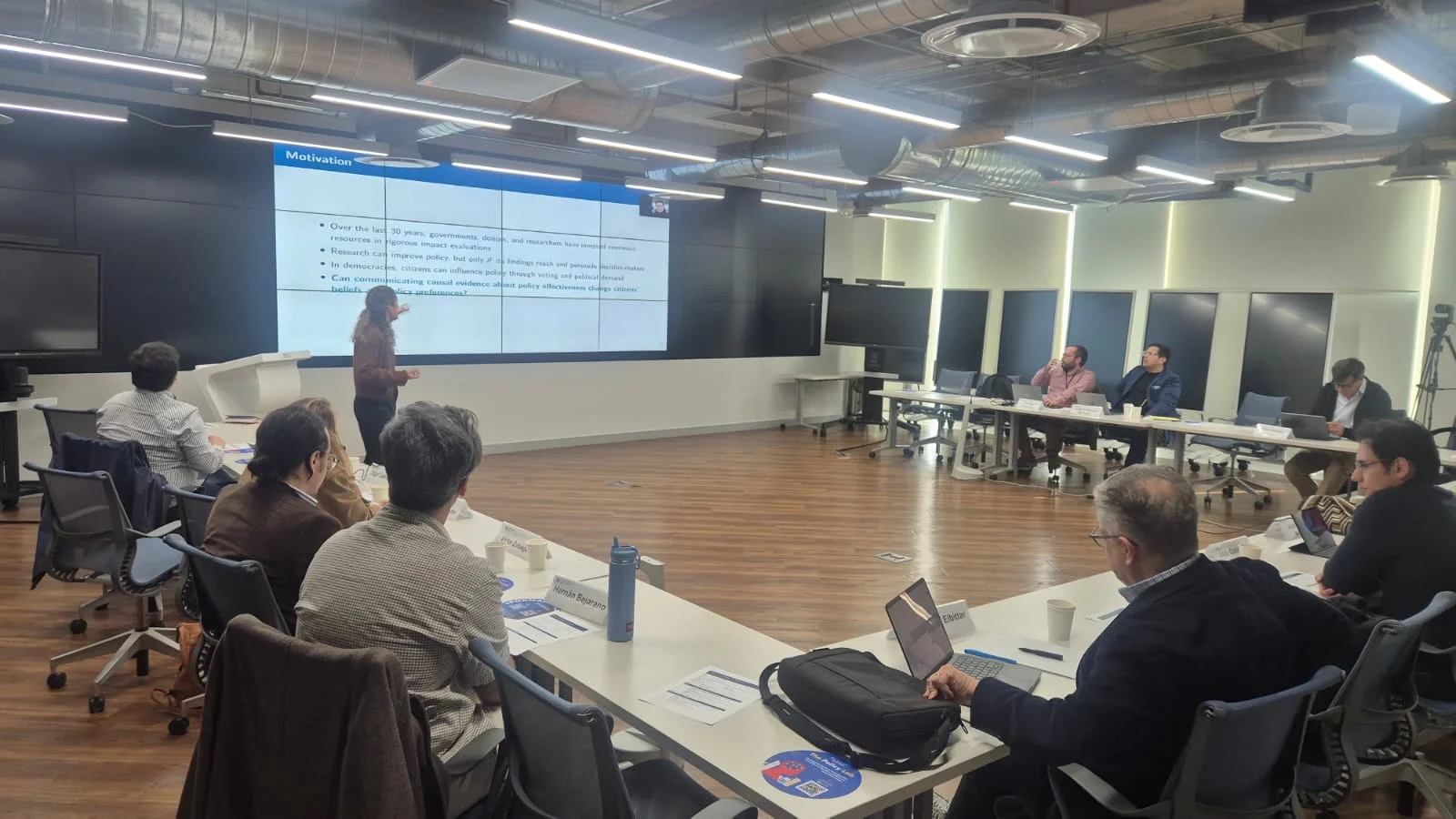
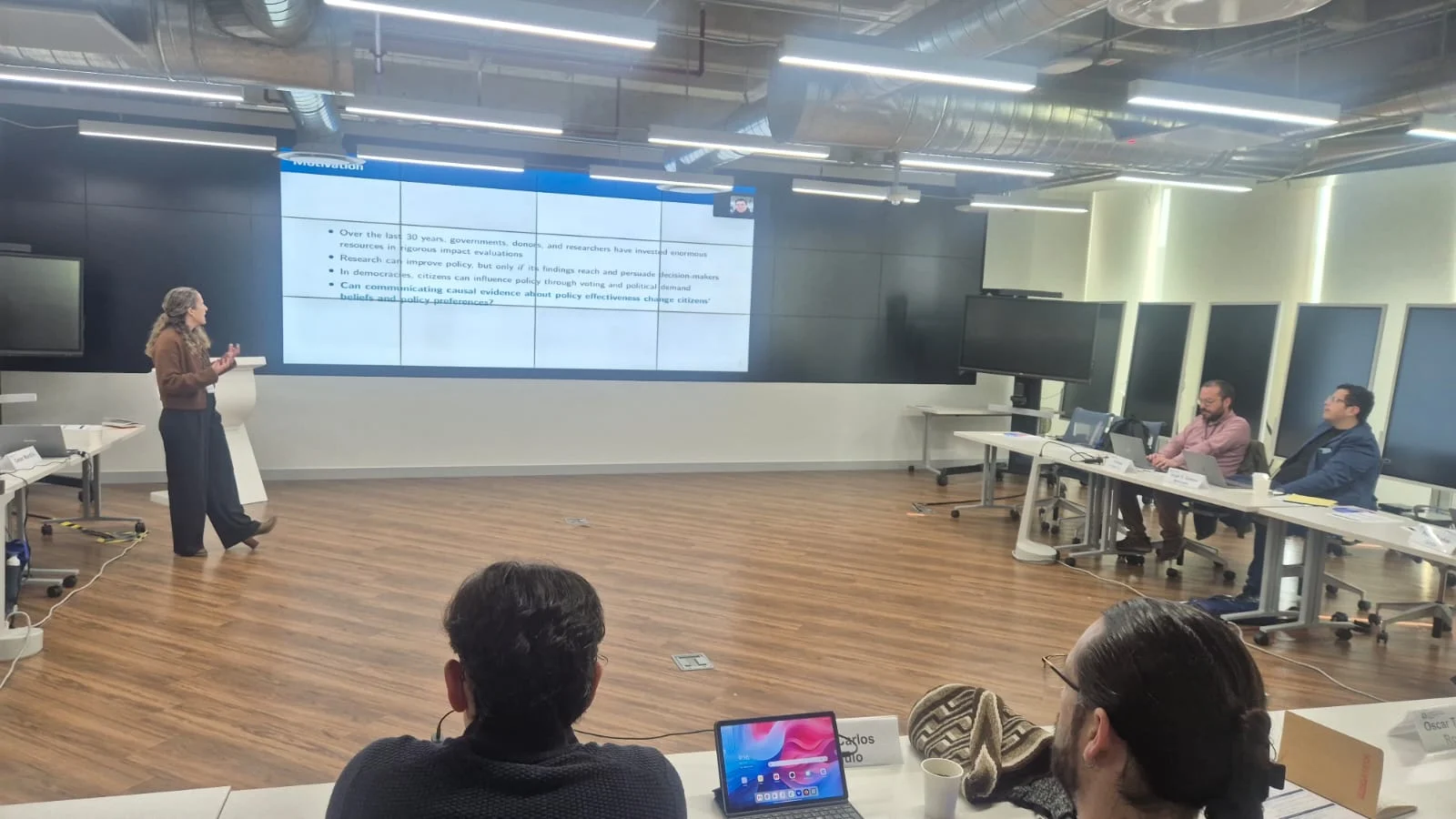
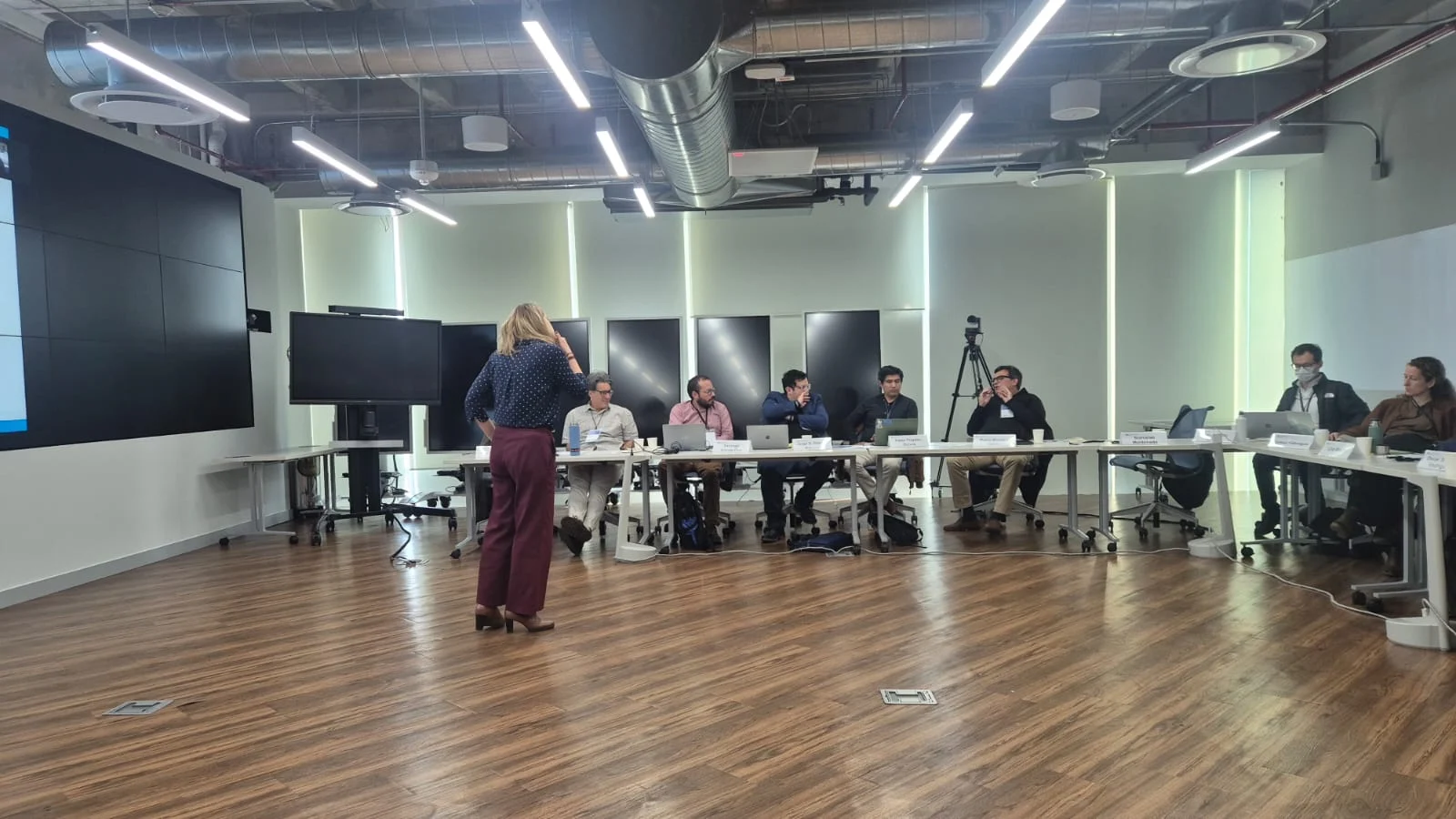
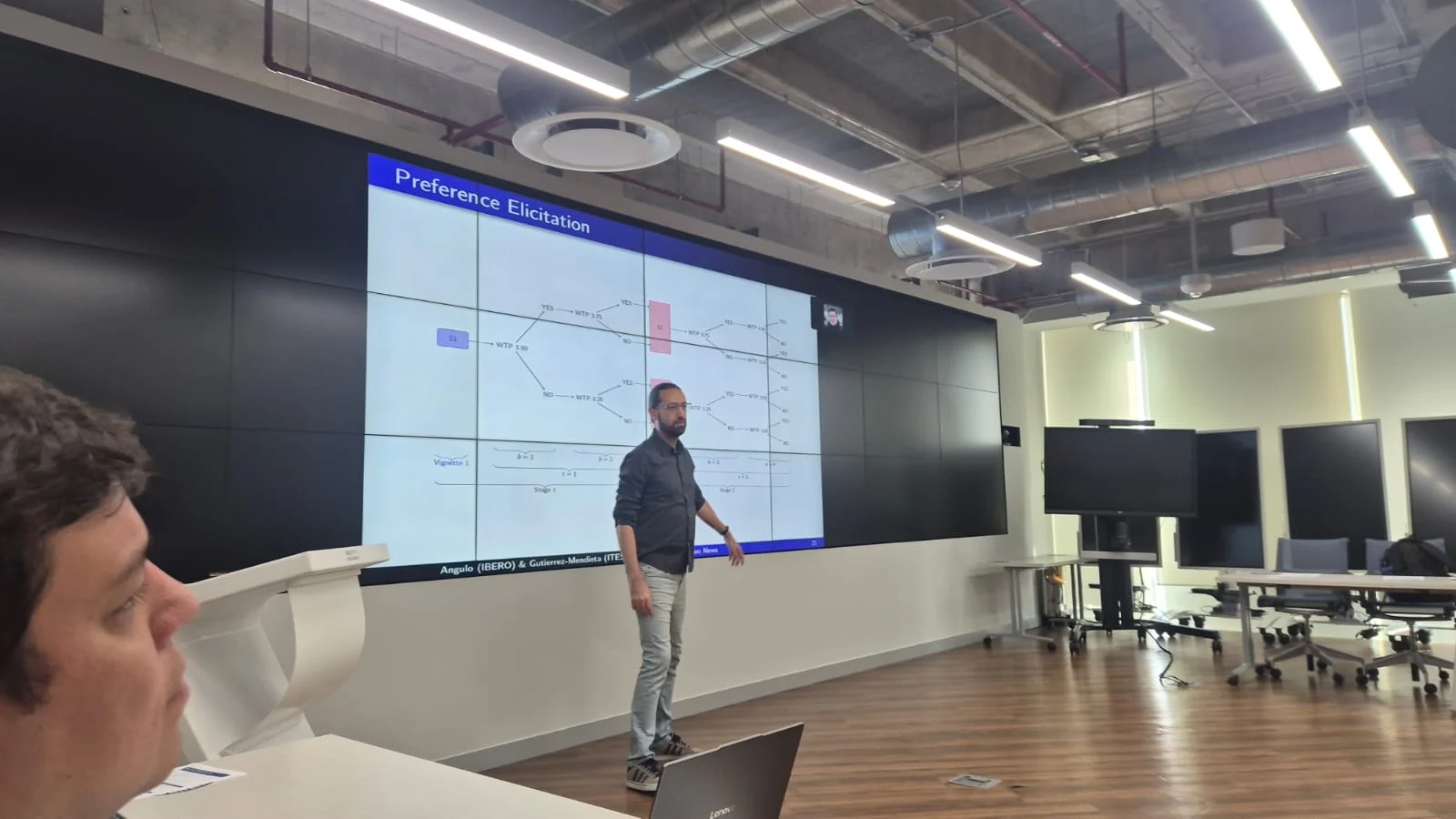
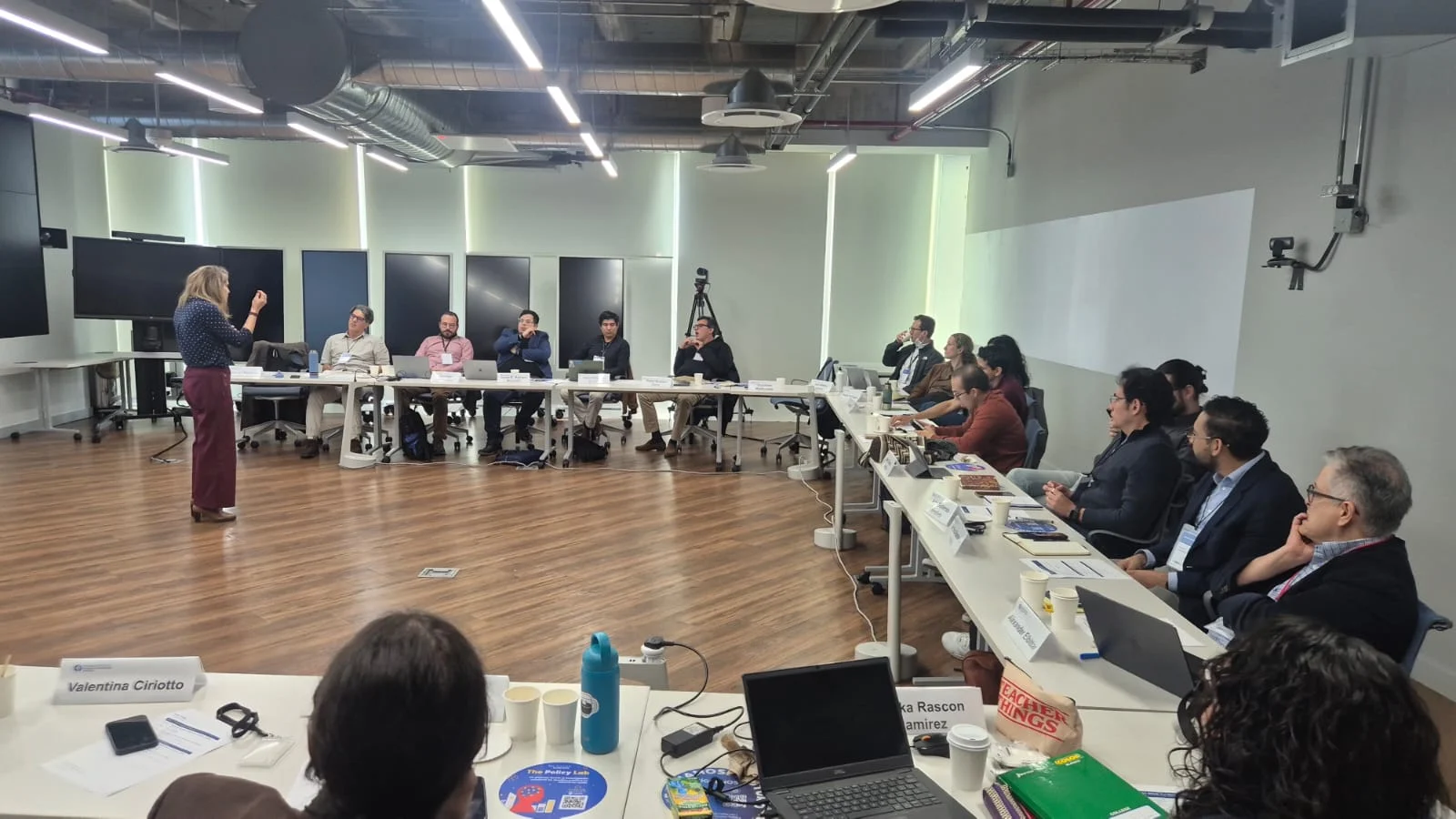
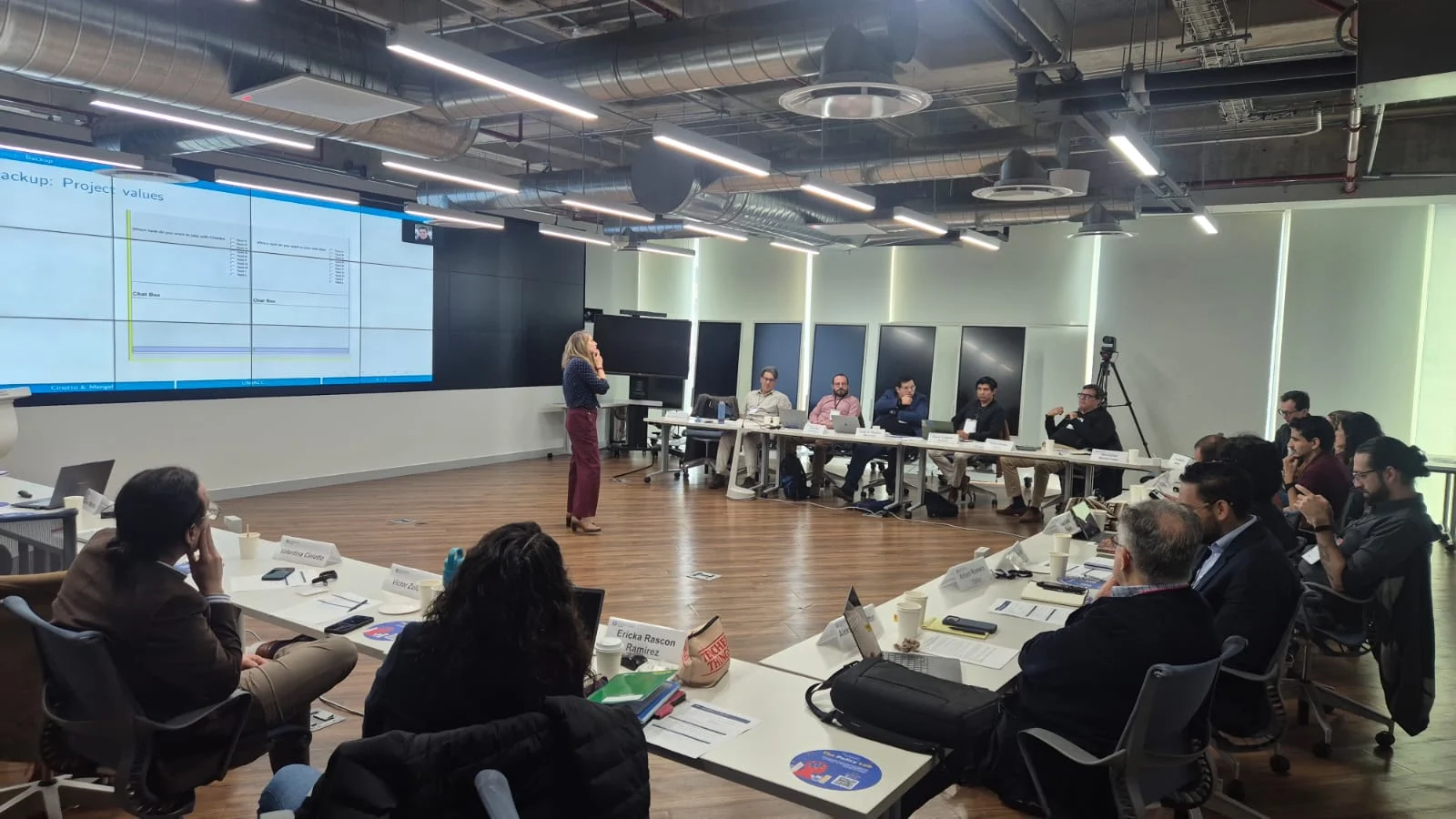
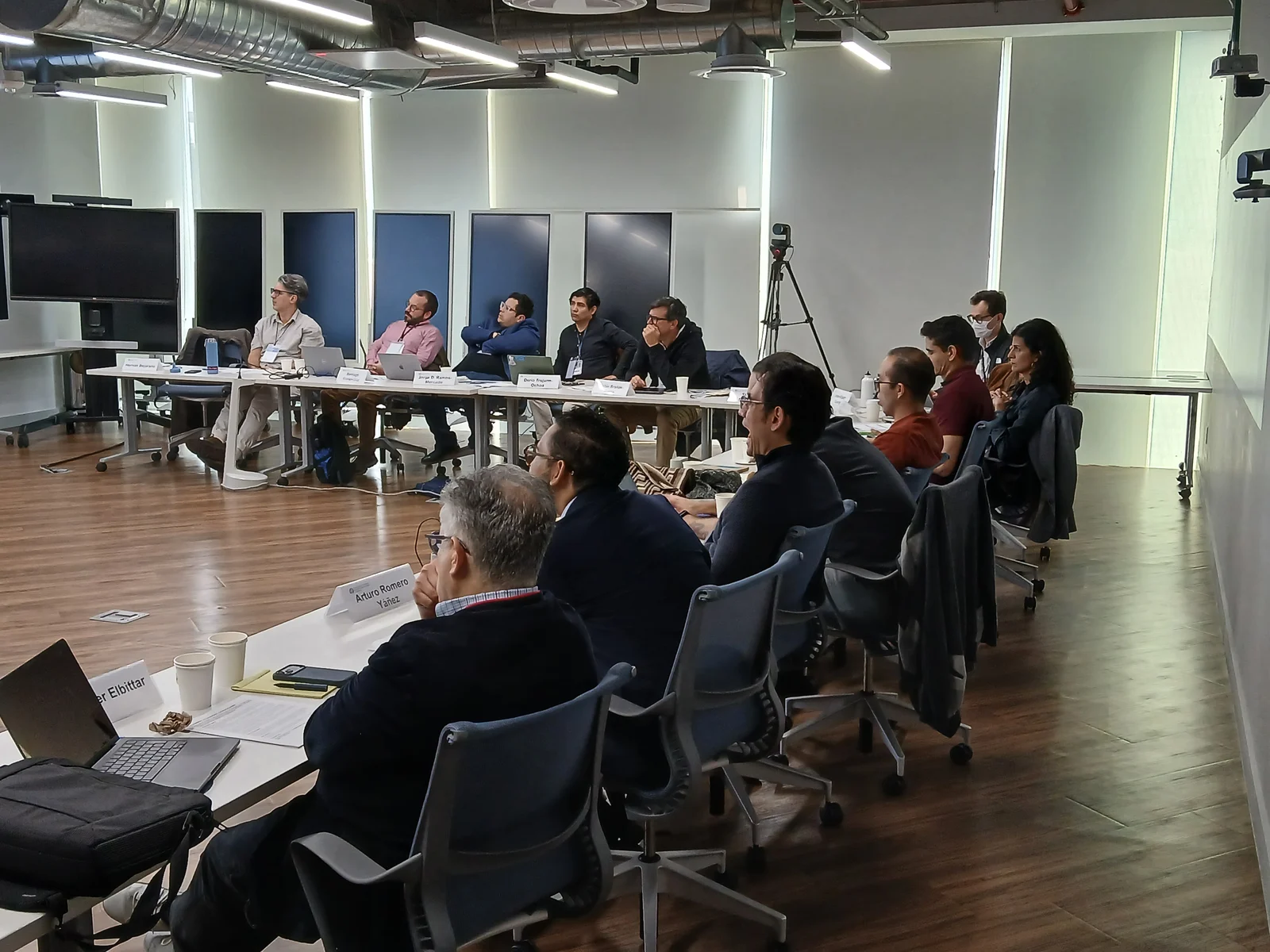
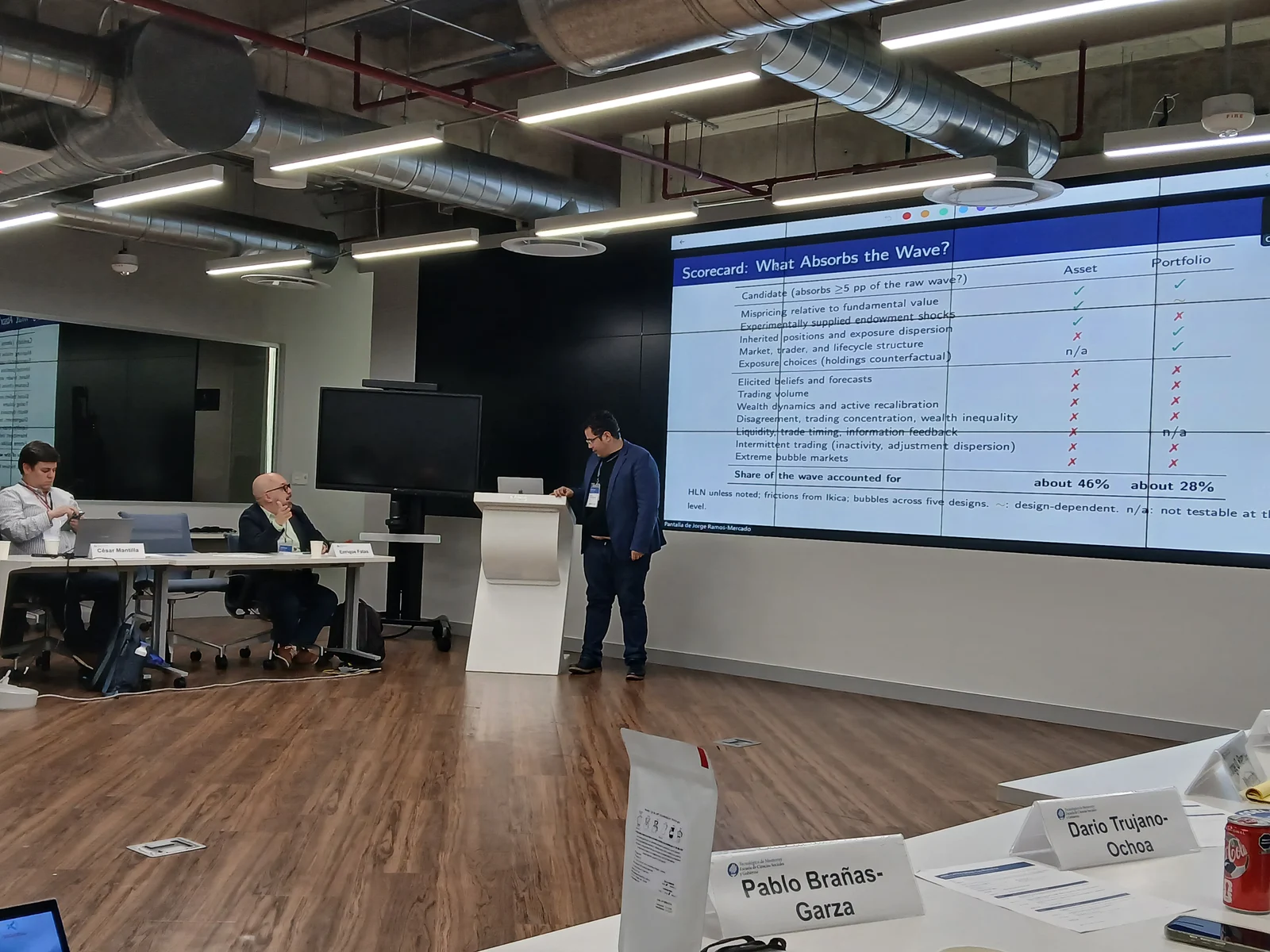
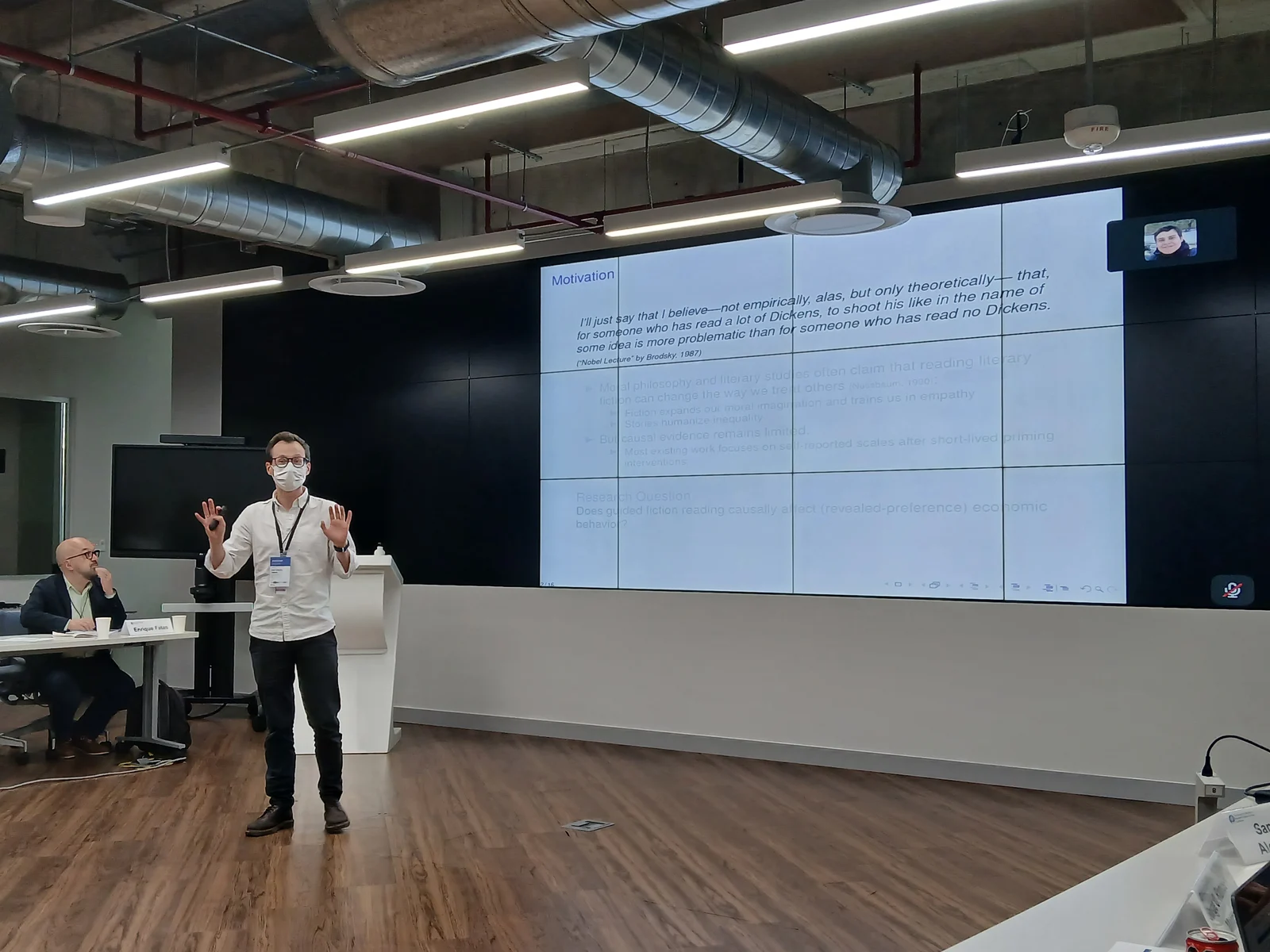
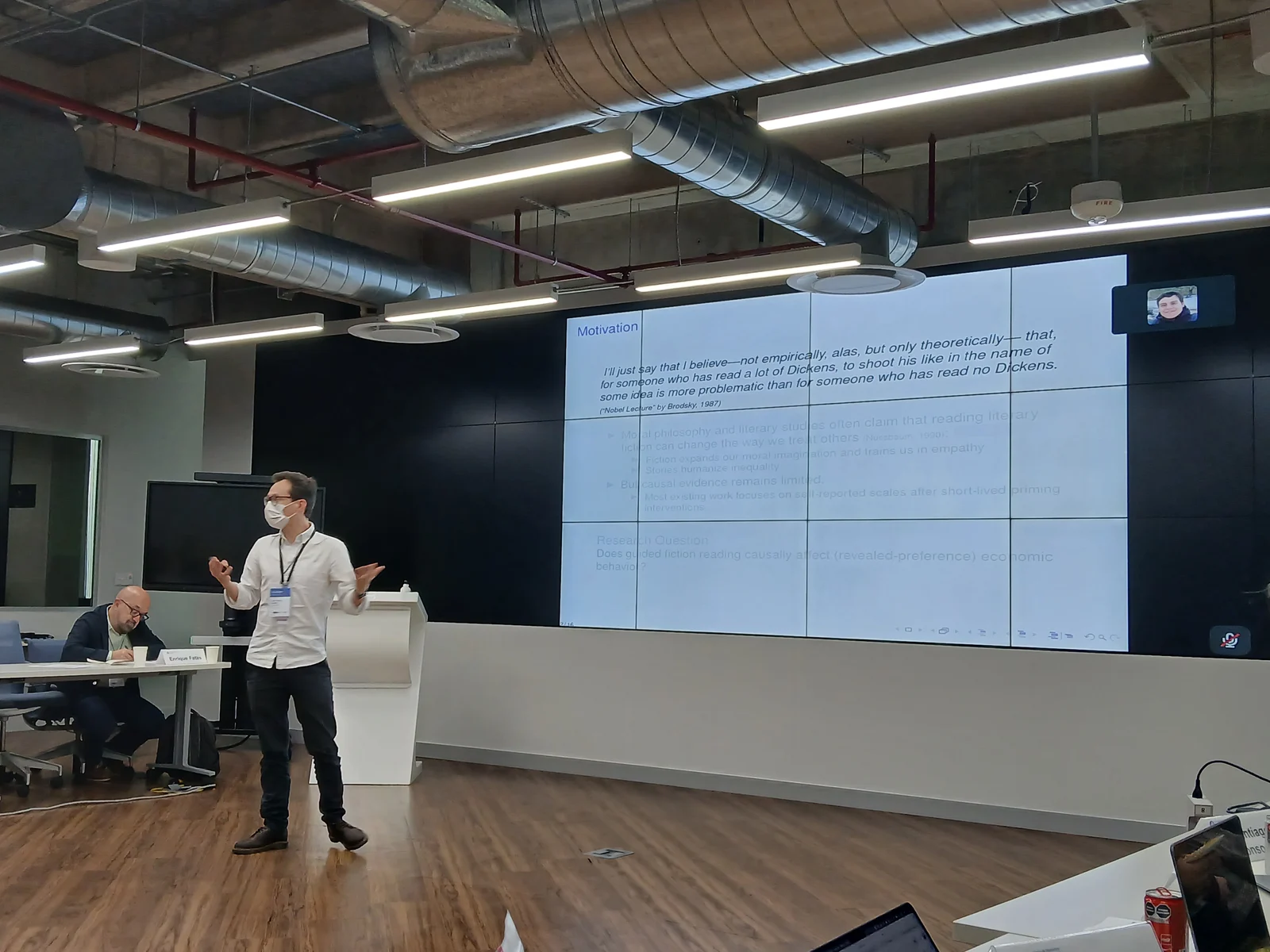
The day focused on behavioral and experimental economics in Latin America. Its program included thirteen papers across four sessions, addressing preference formation, cooperation, market decisions, and the role of beliefs. The photographs document both the presentations and exchanges among participants.
Organized by


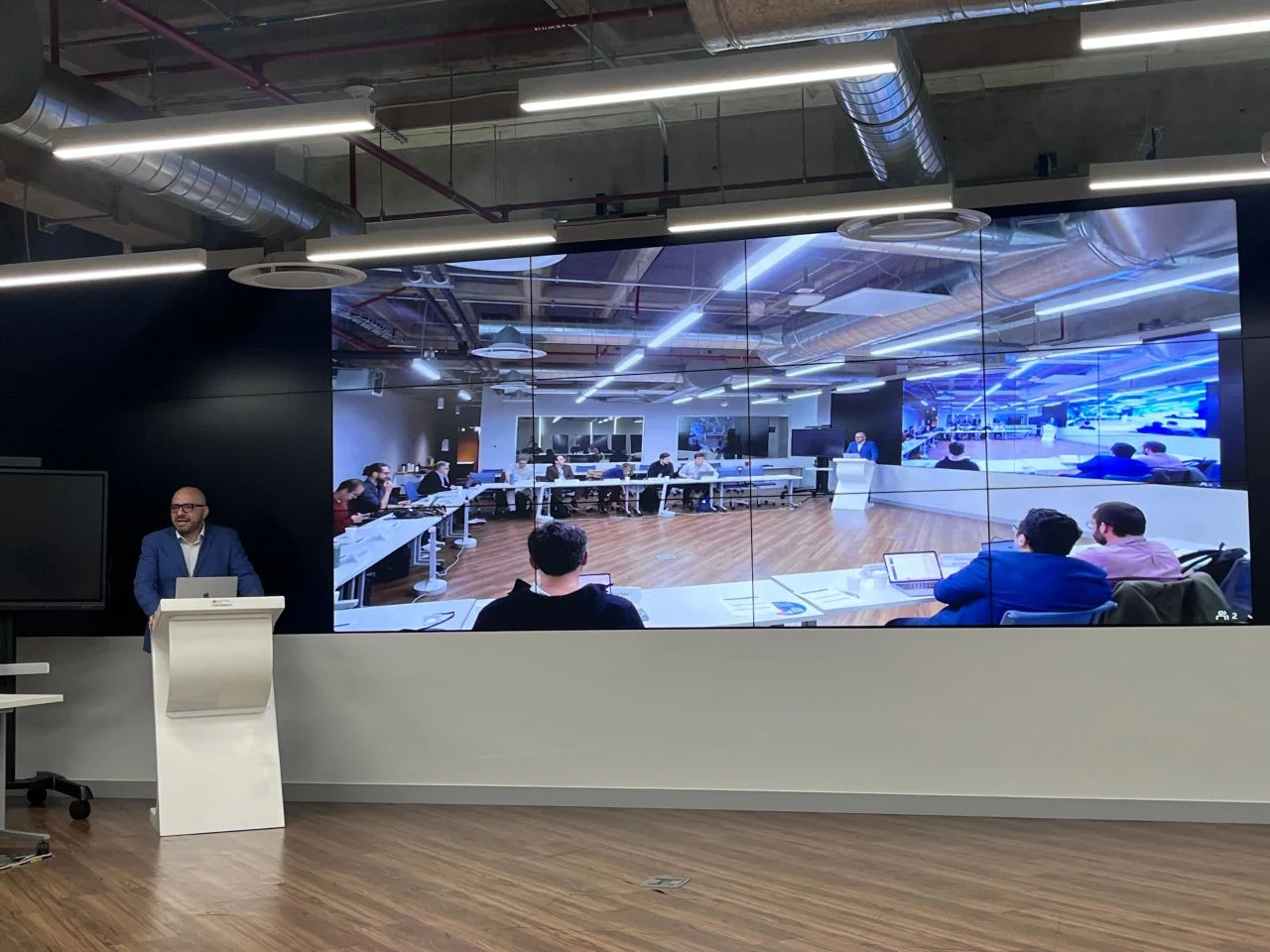
Opening the workshop
Luis Serra, Dean of Research at Tecnológico de Monterrey’s School of Social Sciences and Government, delivered the introductory remarks. His opening was followed by a program combining survey experiments, laboratory designs, and field experiments.
The Decision Theater combined a large presentation screen with a shared discussion space. This combination of presentations and exchanges runs through the workshop’s photographic record.
Information and policy preferences
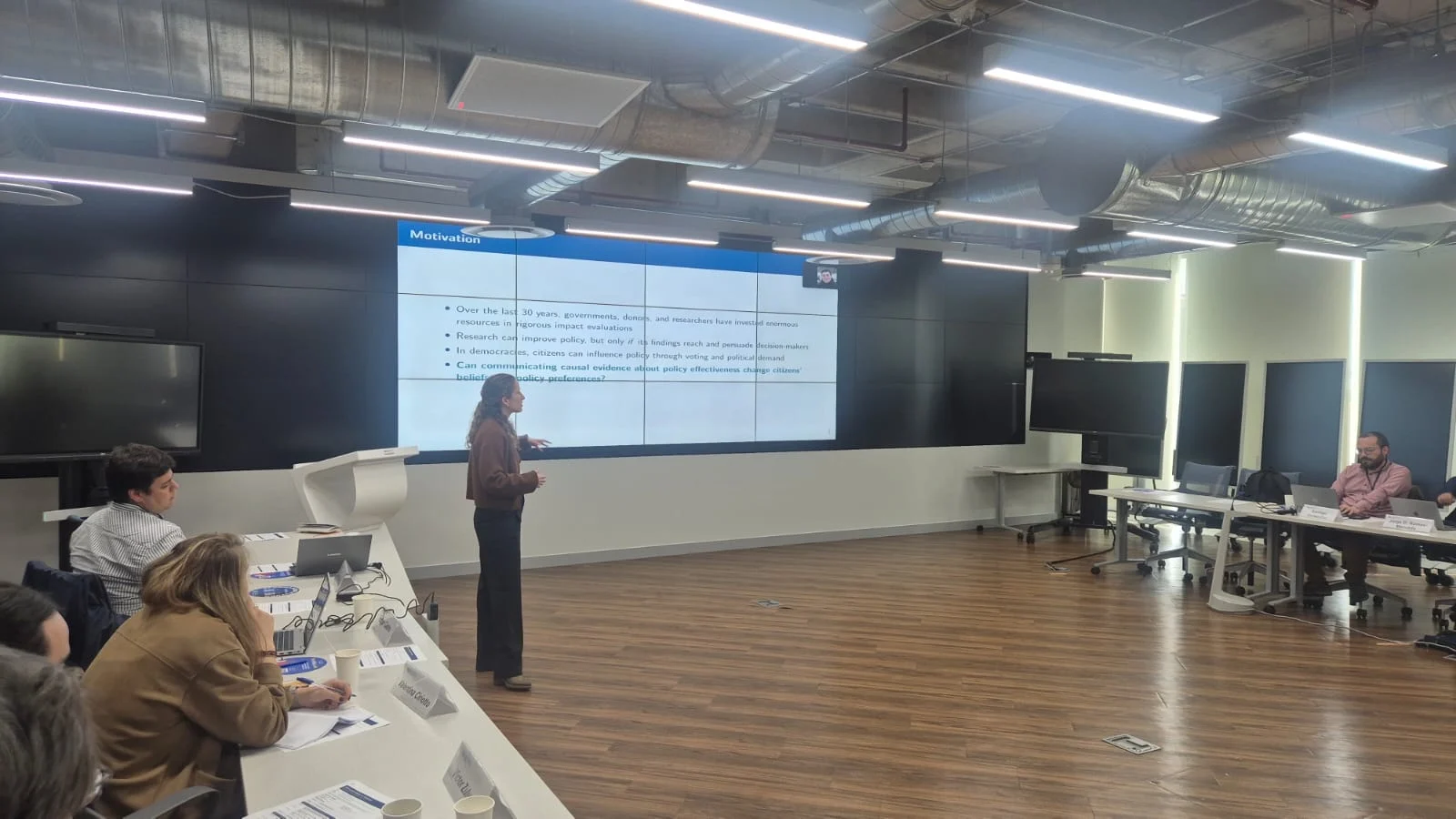
The first session examined how information and the way it is presented relate to economic decisions. Raissa Fábregas’s paper asked whether impact evidence from a conditional cash transfer program can change policy preferences.
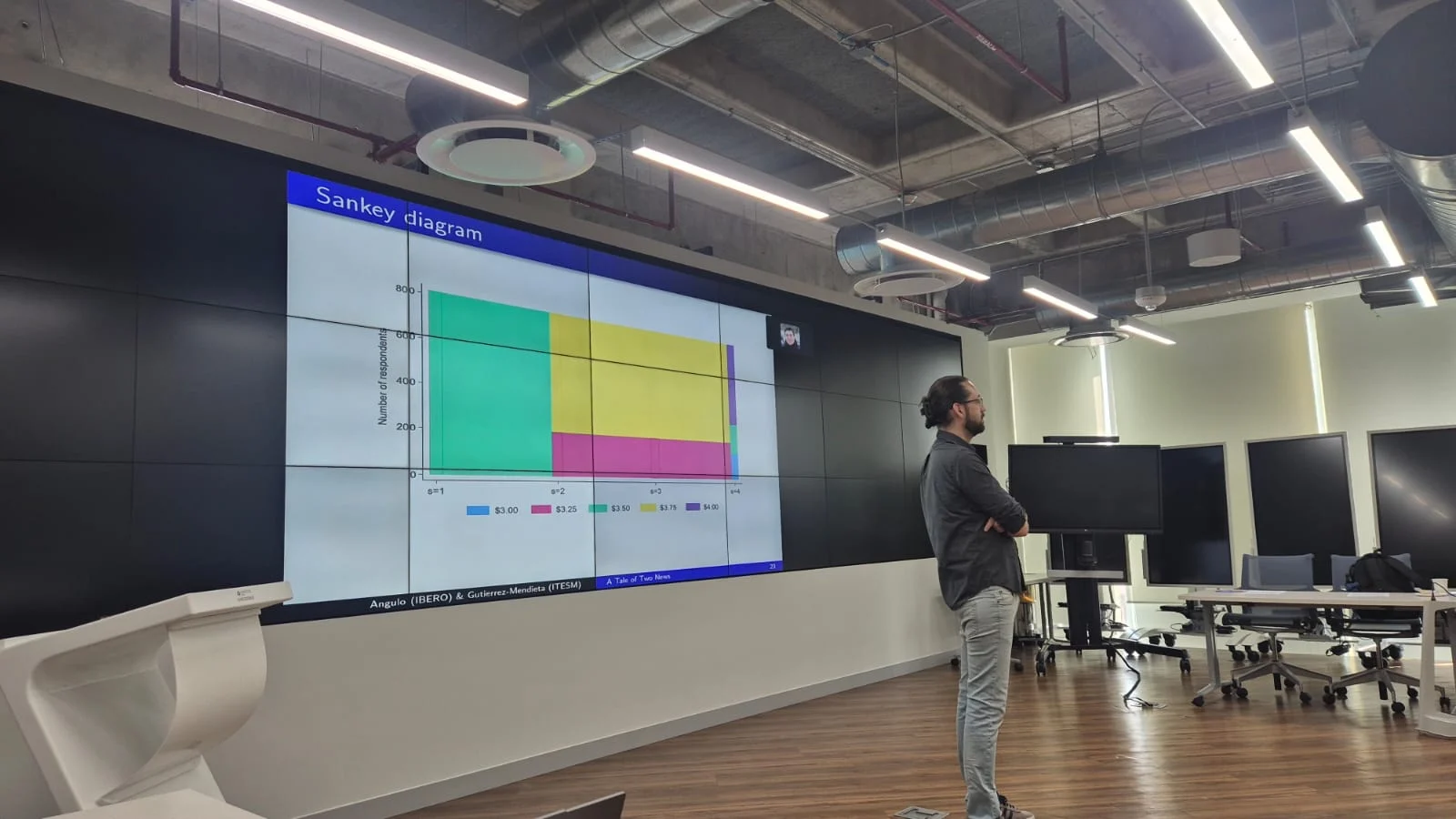
Other papers examined employment framing in trade preferences and the relationship between media outlets and consumption choices. Together, this session placed the communication of evidence and the context of decision-making at the center of the discussion.
Social preferences, gender, and collaboration
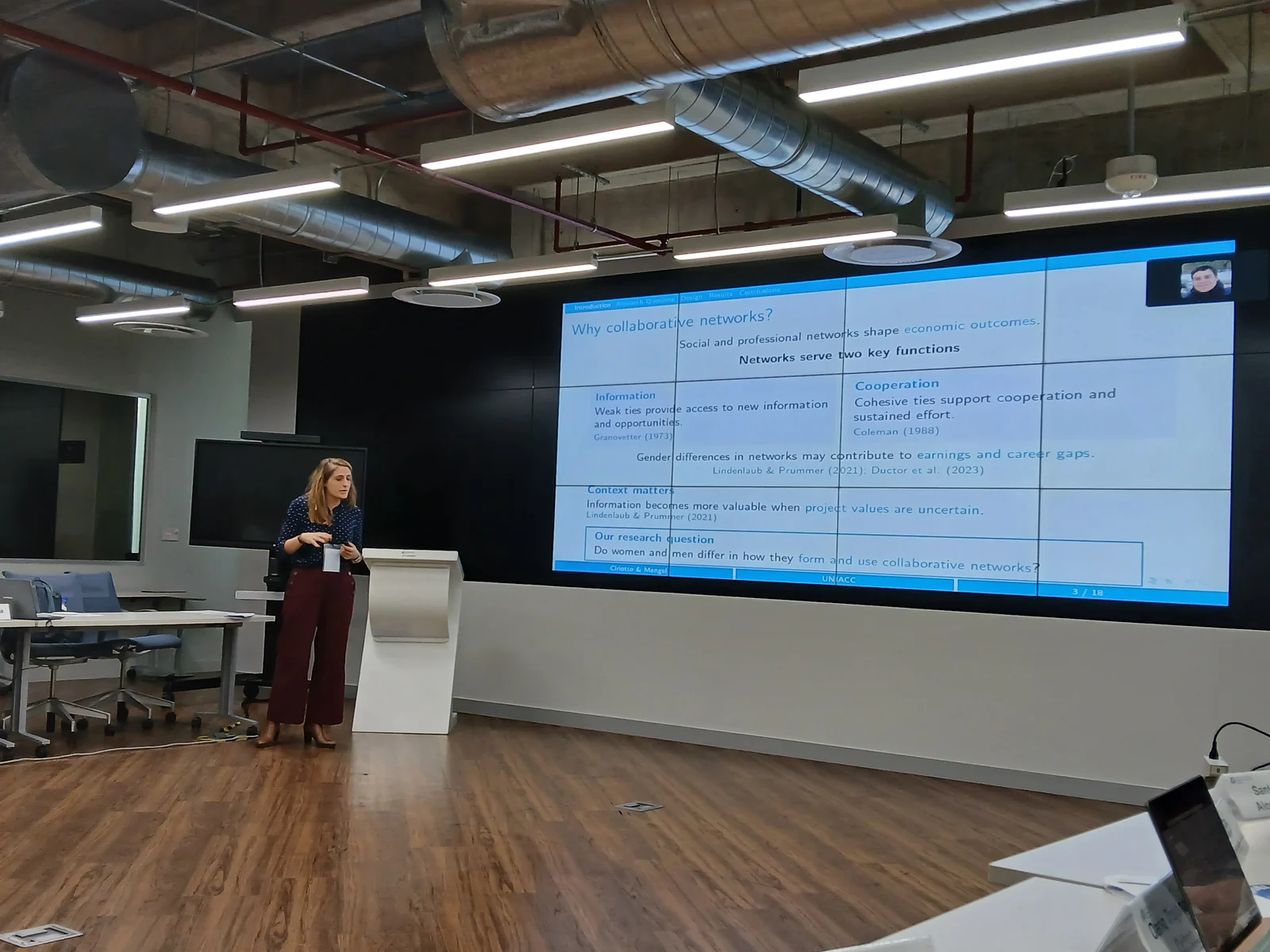
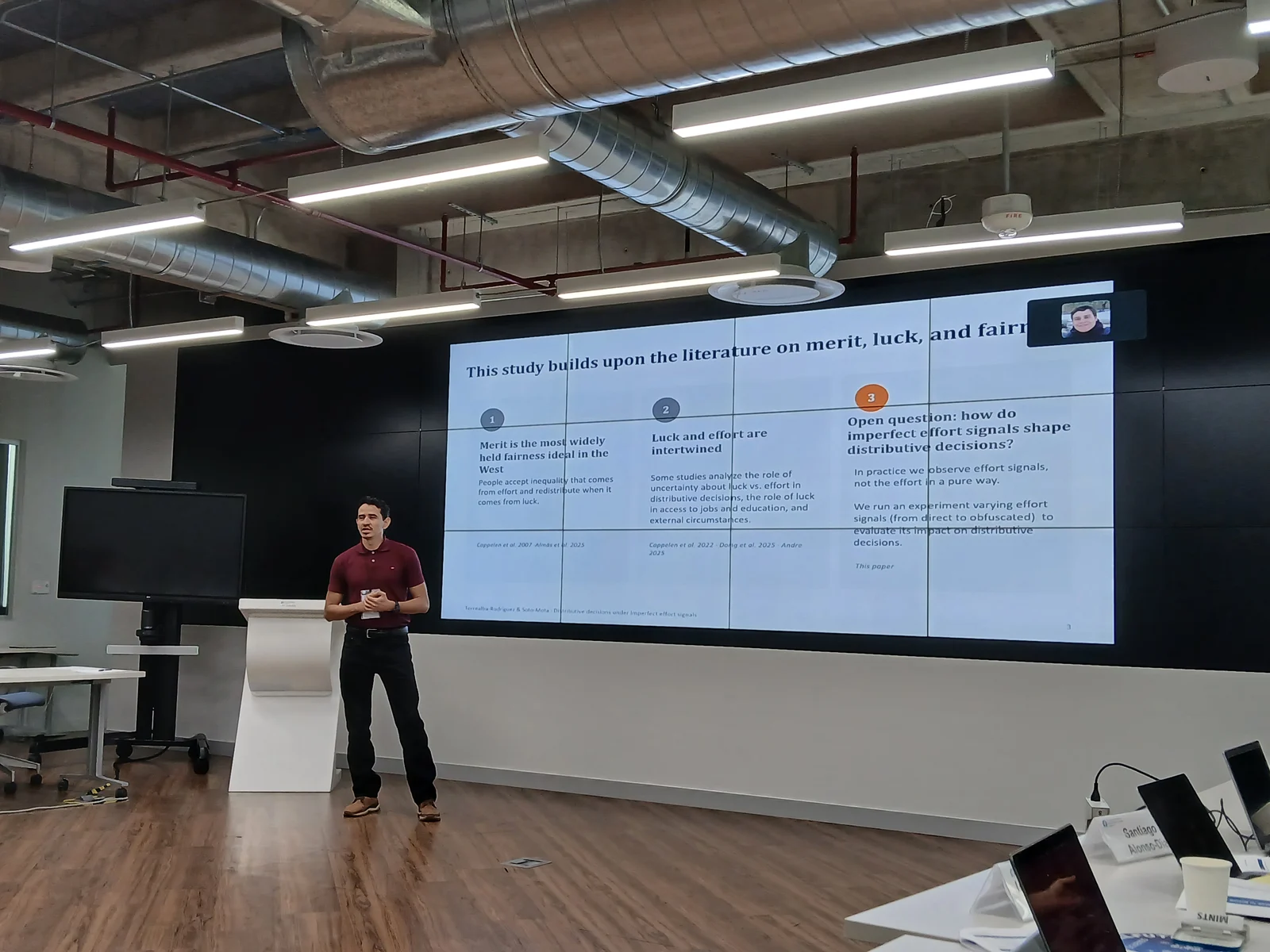
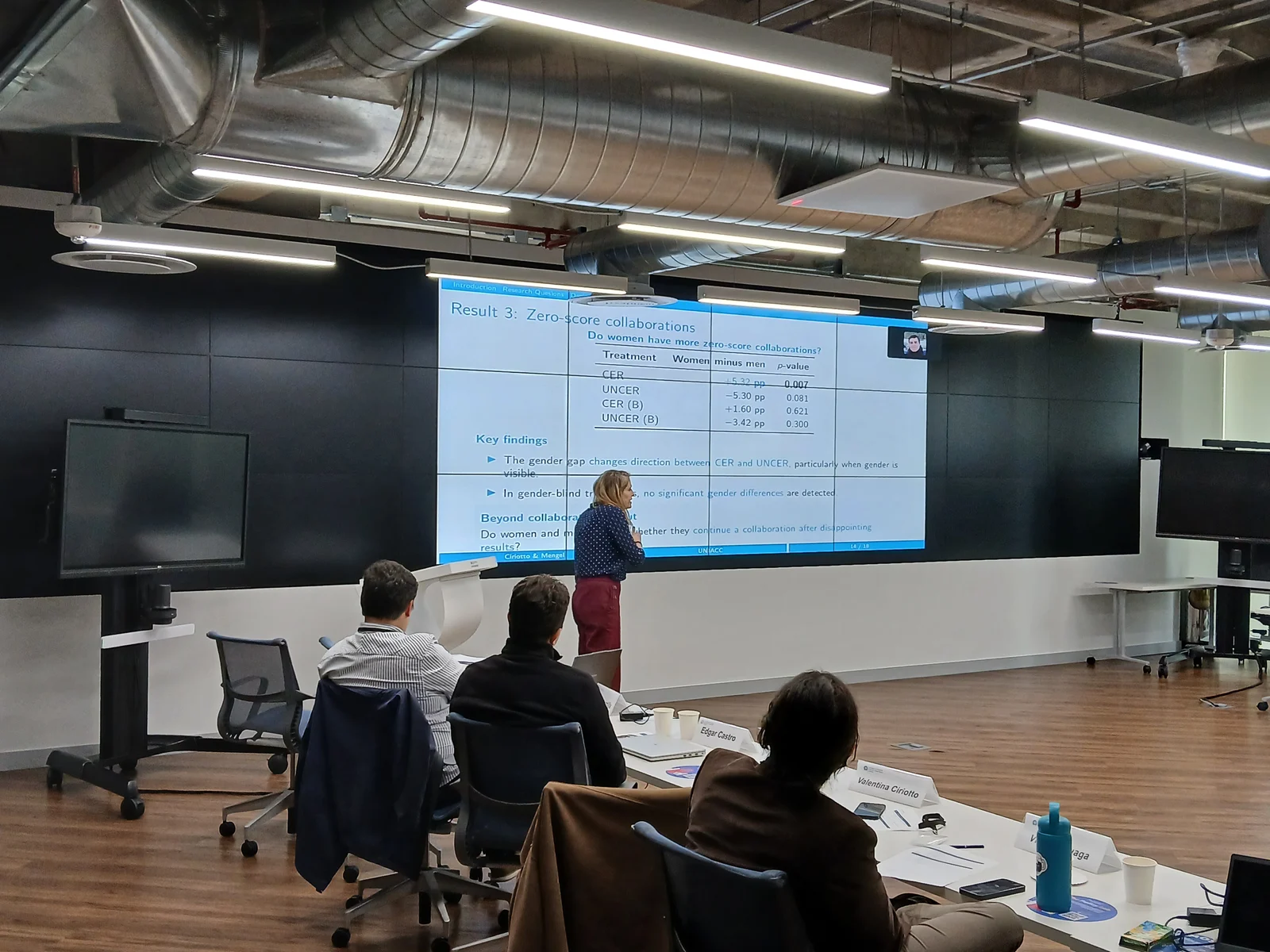
The second session brought together papers on distributive decisions under imperfect information about effort, gender differences in collaborative networks and team formation, and mechanisms behind the daughter effect in Mexico.
These topics connected distributive justice and social relationships with concrete choices about collaboration. The experimental designs offered different ways to study how people assess others and decide whom to work with.
Prices, uncertainty, and market decisions
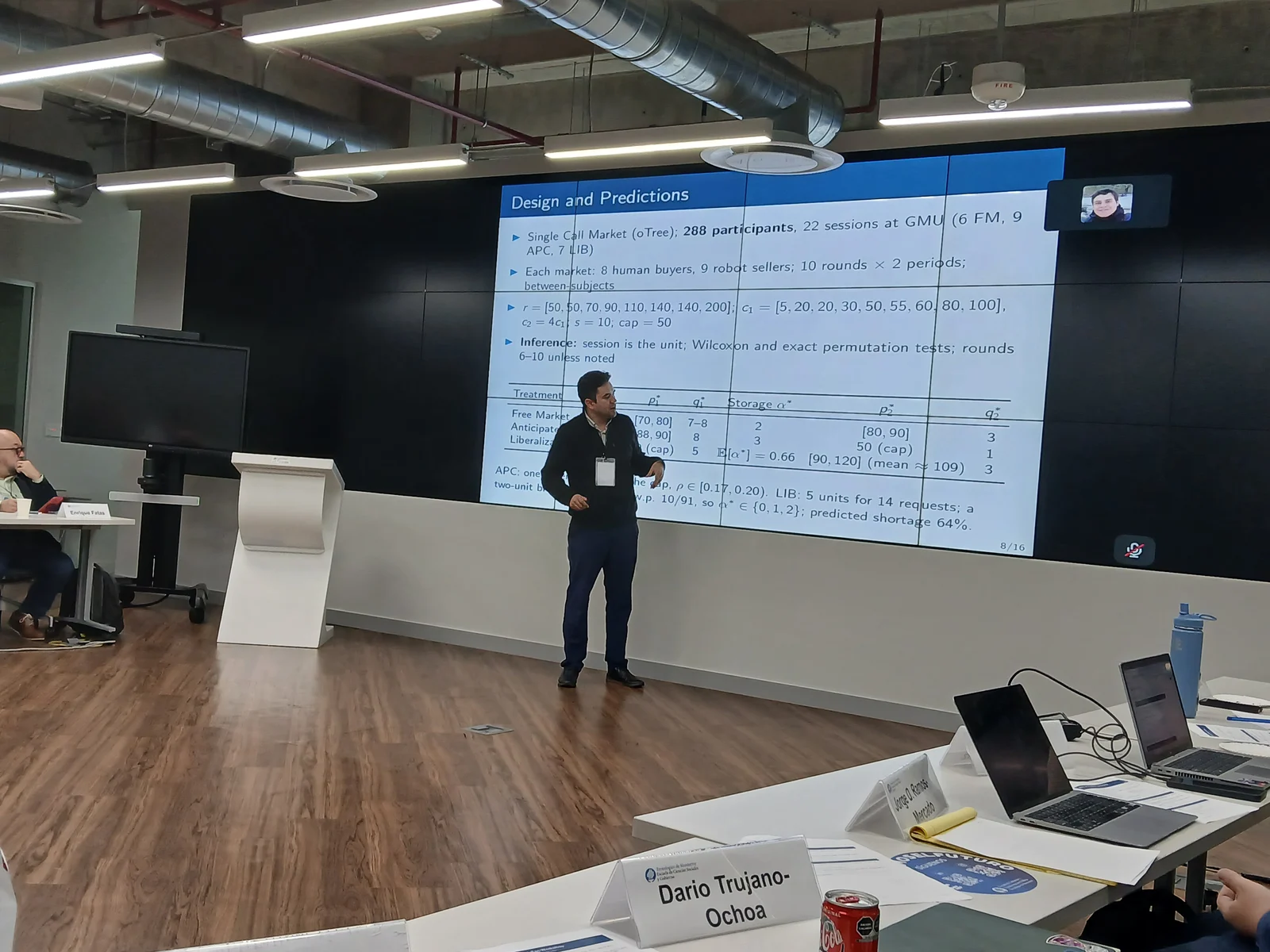
The afternoon session on markets included experimental evidence from Colombia on climate ambiguity and farmers’ responses to prices. It also featured an experiment on price distortions and hoarding and a paper on fat tails in the laboratory.
Together, these topics spanned decision-making under uncertainty and questions about how markets work. The full program preserves the titles and authorship of each contribution.
Education, social cognition, and beliefs
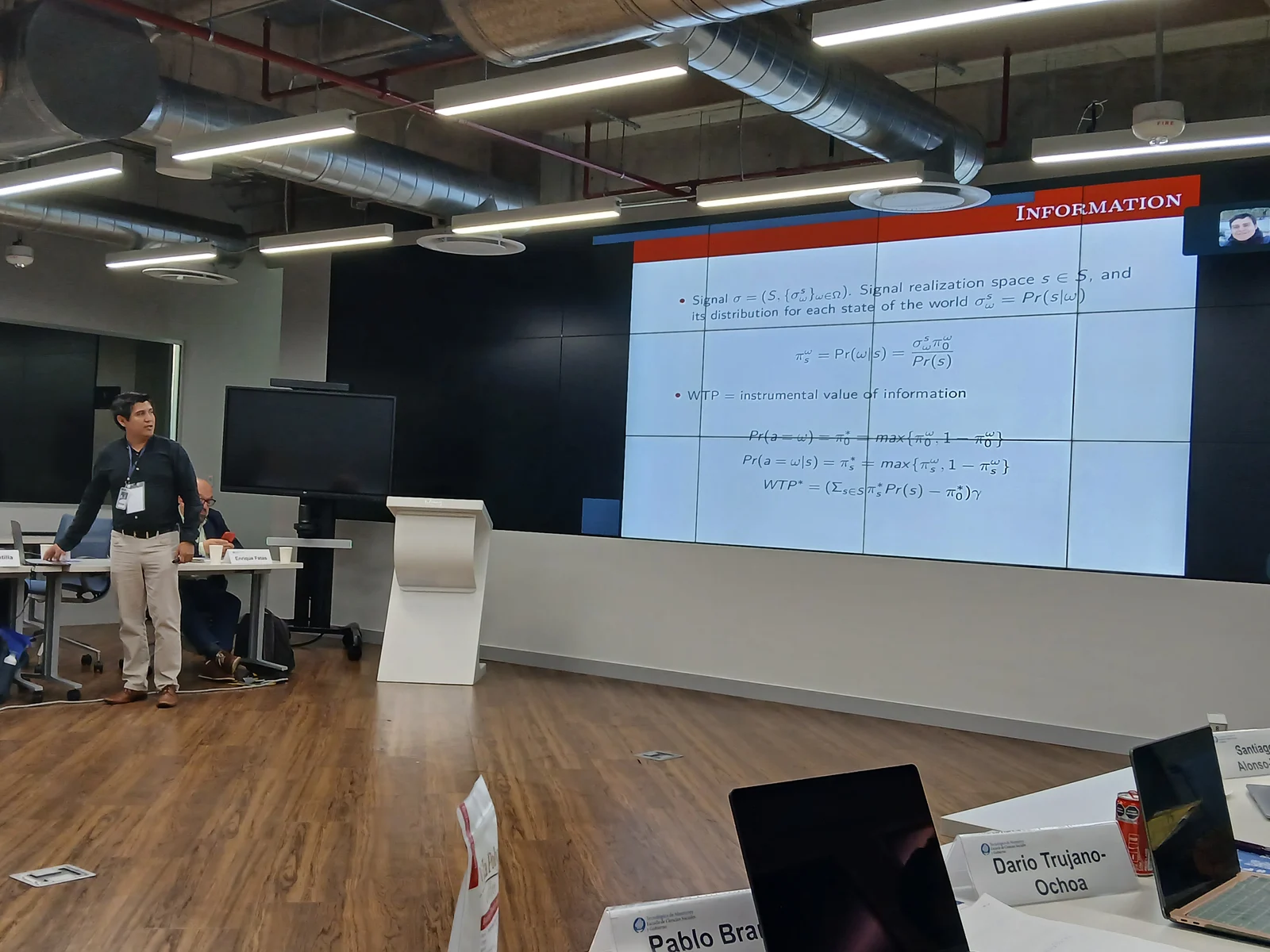
The final session addressed fiction and prosociality through a field experiment, information acquisition when others make the decision, and misperceptions of social network structure.
These contributions extended the day’s discussion to how people interpret others and form beliefs. The range of questions and methods illustrates the breadth of the behavioral and experimental agenda represented in the program.
A space for academic exchange
Beyond the presentations, the photographs show questions, conversations, and discussions among participants. The closing group photograph captures this collective dimension: a day for sharing research and connecting the behavioral and experimental economics community.
BEER Lab thanks the co-organizing institutions and everyone who took part. The program and its PDF versions remain available in the workshop archive.
Scenes from the workshop
A record of the opening, presentations, and academic exchanges. Select a photograph to view the complete image.
View the remaining photographs
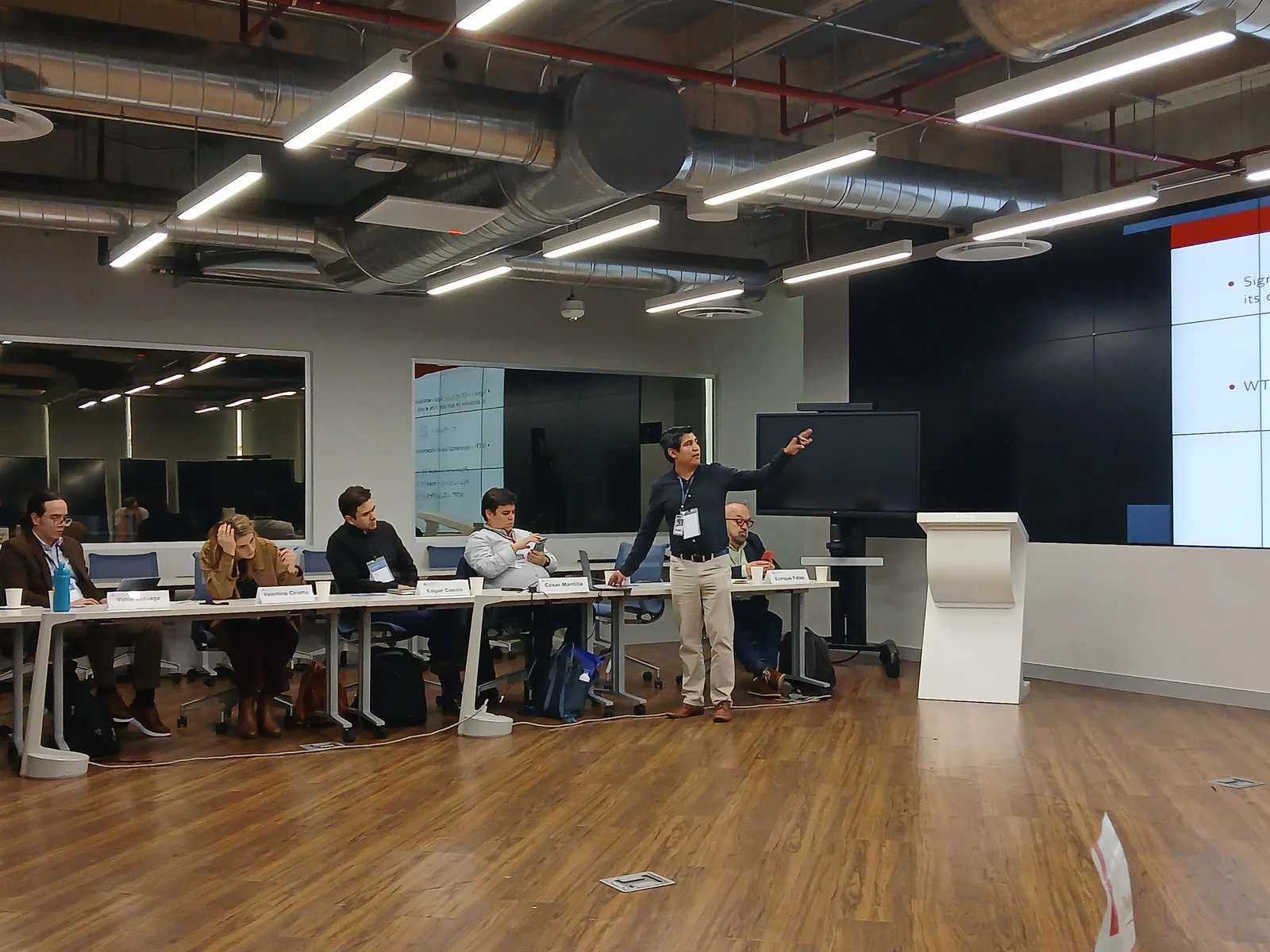
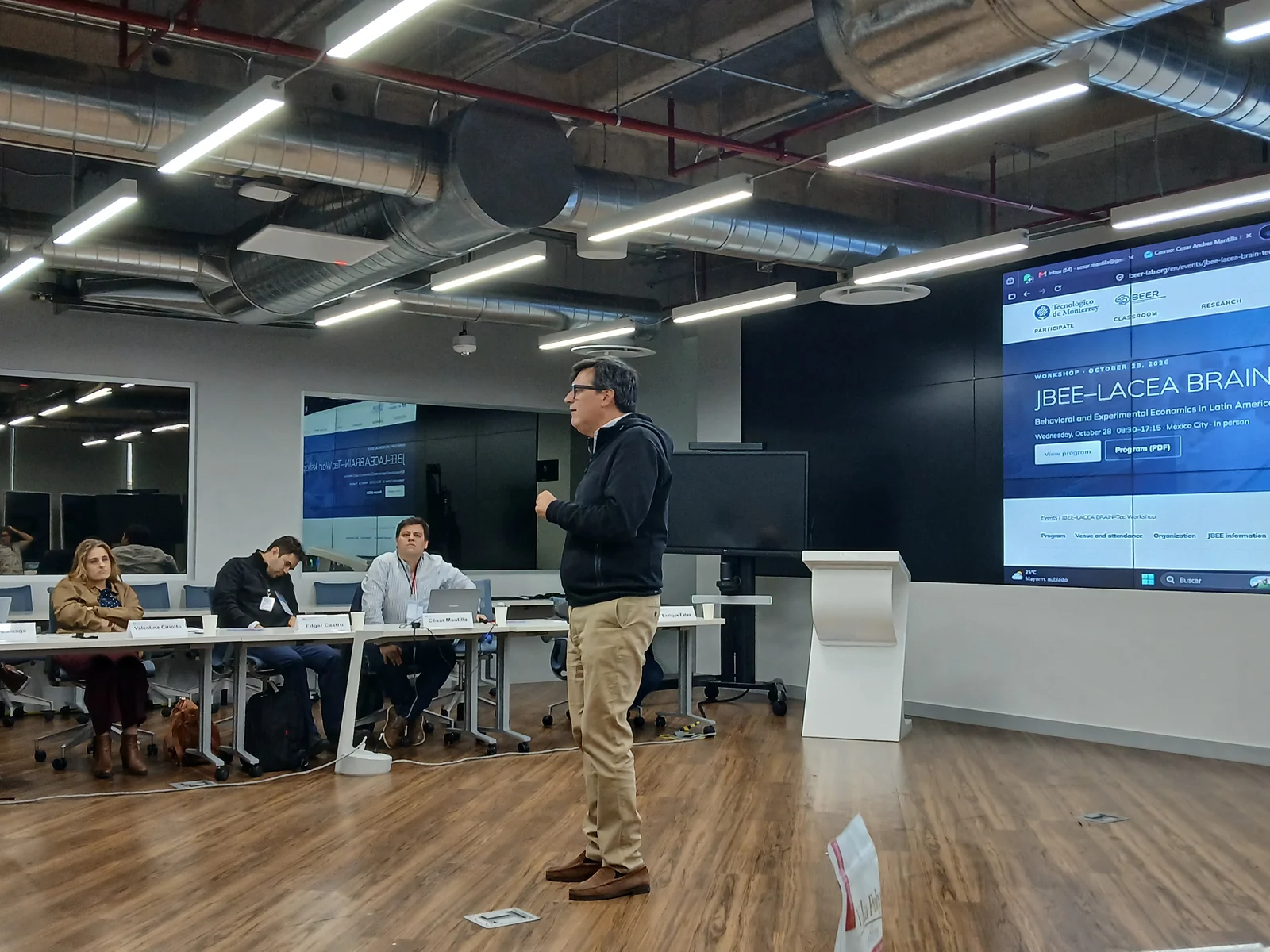
Photographs supplied by BEER Lab; excluded from the open license covering the text.
Academic organization
Pablo BrañasUniversidad Loyola Andalucía · Editor-in-Chief, JBEE
Alexander ElbittarCIDE
Hernán BejaranoCIDE
Stanislao MaldonadoTecnológico de Monterrey
César MantillaPontificia Universidad Javeriana
Lina MorosUniversidad de los Andes
Program and materials
Explore the workshop archive for the papers, their authors, and the full program.
Papers included in the program
Information, framing, and policy preferences
- Does Impact Evidence Affect Policy Preferences? Evidence from Mexico's Landmark CCT ProgramRaissa Fábregas
- How Employment Framing Affects Trade Preferences: Evidence from Survey ExperimentsMarisol Rodríguez Chatruc, Ernesto Stein, Razvan Vlaicu, Victor Zuluaga
- A Tale of Two News: The Impact of Media Outlets on Consumption ChoicesJuan Carlos Angulo, Aldo Gutiérrez-Mendieta
Social preferences, gender, and collective behavior
- Distributive Decisions under Imperfect Effort Signals: A Spectator Design ExperimentOscar Torrealba-Rodríguez, Pablo Soto-Mota
- Gender Differences in Collaborative NetworksValentina Ciriotto, Friederike Mengel
- Gender Differences in Team FormationAntonio Cabrales, Lorenzo Ductor, Ericka Rascon Ramirez, and Ismael Rodriguez-Lara
- Disentangling Mechanisms behind the Daughter Effect in Mexico: A Survey ExperimentArturo Romero Yáñez, Alberto Simpser, Pablo Ignacio Soto Mota
Prices, uncertainty, and markets
- Climate Ambiguity and Farmers' Response to Prices: Experimental Evidence from ColombiaLina Restrepo-Plaza, Enrique Fatas, Margarita Gáfaro, Camilo Bohórquez-Peñuela, Alejandro Sánchez-Naranjo
- Price Distortions and Hoarding: An ExperimentEdgar Castro, César Martinelli, Nicholas Brown
- Fat Tails in the LabJorge D. Ramos-Mercado, Santiago Alonso-Díaz, Hernán Bejarano
Education, social cognition, and beliefs
- Reading Others as Individuals: A Field Experiment on Fiction and ProsocialityJuan Ferro, José-Alberto Guerra
- Belief Heterogeneity and Information Acquisition When Others Make the DecisionDario Trujano-Ochoa
- Seeing Less Than There Is: Misperceptions of Social Network StructurePablo Brañas-Garza, Jaromír Kovářík, Friederike Mengel, and Mónica Vasco